
Whiskers: Why So Controversial?
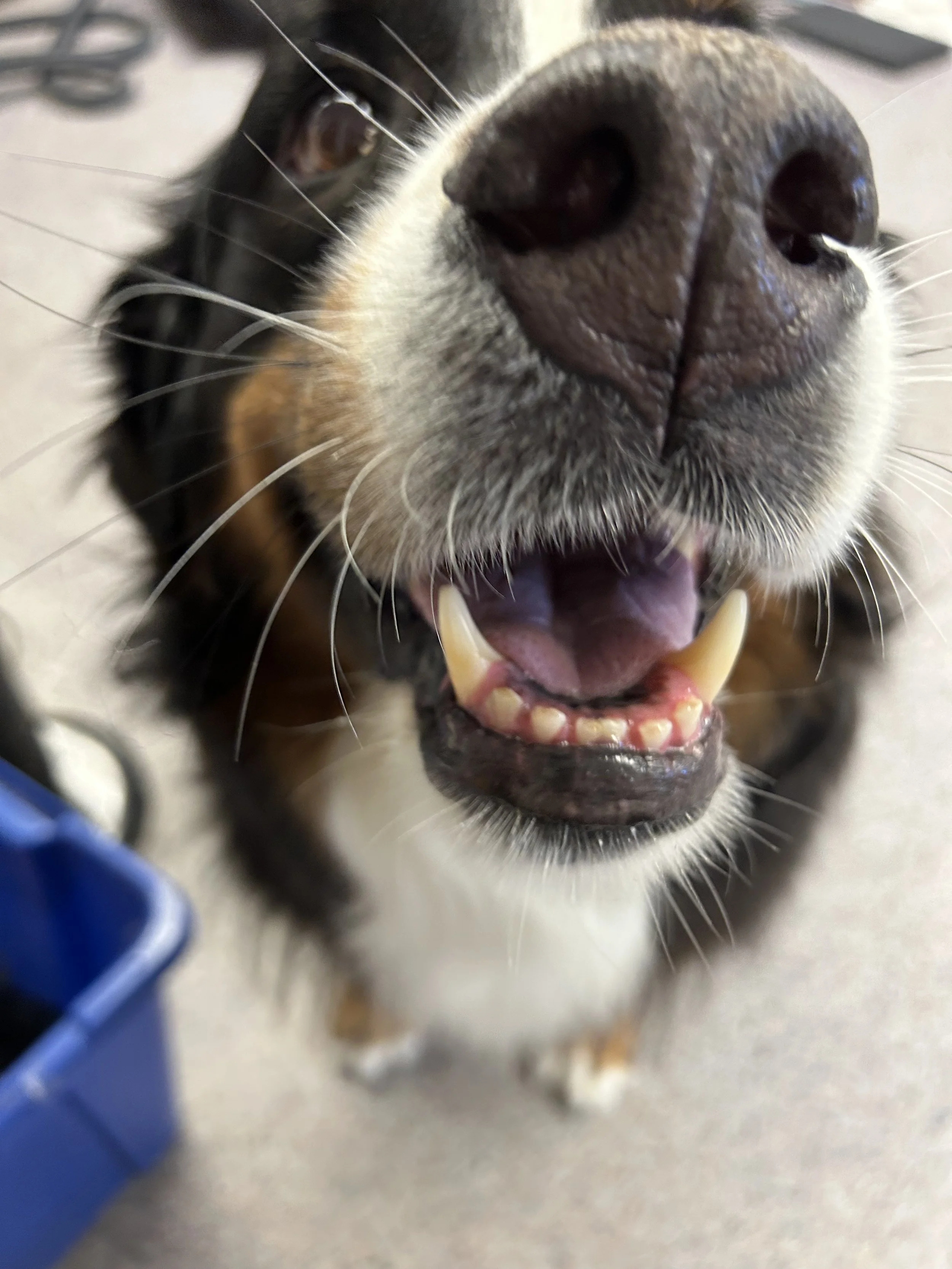
If you've spent any time on the internet, you've probably heard:
“NEVER CUT YOUR DOG'S WHISKERS!”
But then you look at professionally groomed poodles, doodles, and other dogs with sculpted faces and think… well, somebody clearly has been cutting them.
So what's the deal?
First, whiskers really are different from regular hair.
Dog whiskers, or vibrissae, are specialized sensory hairs. Their follicles are highly innervated, and research shows that dogs respond to stimulation of their whiskers and use them as part of their sensory system.
So the idea that they're completely useless facial hairs isn't accurate.
But here's where things get interesting.
We still don't have a huge body of research showing exactly how much temporarily shortening a dog's whiskers affects their everyday life.
A 2025 study specifically described the research on canine whiskers as limited and was the first detailed study of their sensory anatomy and function. It was also a relatively small pilot study.
So why has trimming them been so common?
Trimming or shaving canine whiskers has been practiced for decades, particularly in grooming and show-dog settings. Poodle muzzles, for example, have traditionally been shaved in certain grooming styles.
And that's part of what makes this conversation so interesting.
If trimming whiskers were consistently causing obvious, dramatic problems with dogs' ability to move around, play, eat, or navigate their normal environments, you'd expect that to be pretty noticeable after generations of dogs being groomed this way.
But that isn't the same thing as proving there is no effect.
A dog could potentially lose some sensory information without becoming noticeably impaired to their owner or groomer.
That's an important distinction.
From a grooming perspective…
I’m never going out of my way to cut whiskers!
That said, if I’m cutting or shaping the face of a dog who needs a haircut, it’s nearly impossible to cut the hair and not the whiskers since they’re so intertwined.
Poodles, doodles, and similar dogs can have a lot of hair covering the muzzle and face. If you're shortening and shaping that hair, you're working in the exact area where many of those whiskers grow.
It’s not making a conscious decision to “remove the dog's sensory organs.”
It’s trimming the facial coat, and the whiskers growing through that coat get trimmed along with it.
So should you be worried?
There's no reason to panic if your dog's whiskers have been shortened during a groom!
Cutting the hair itself isn't painful because the nerves are concentrated in the follicle, not running through the hair shaft. The whisker will also grow back.
The more reasonable takeaway is simply that whiskers do have a sensory purpose, so there's not much reason to intentionally remove them when you don't need to.
And definitely don't pluck them. That's different from trimming the hair and can be painful because you're disturbing the sensitive follicle.
So… what's the answer?
For me, it's pretty simple:
If I'm not trimming the face, I'm not going to bother the whiskers.
If I'm giving a dog a sculpted facial haircut, whiskers will also get trimmed as part of that haircut.
I wouldn't tell someone that whiskers are completely meaningless, but I also wouldn't tell them that trimming the whiskers is going to dramatically change their dog's ability to navigate the world.
The research simply isn't strong enough to make those kinds of sweeping claims.
And honestly, that's probably the most important part of this conversation.
Sometimes the internet turns a nuanced topic into a hard-and-fast rule.
Whiskers are real sensory structures. That's well supported.
Exactly how important those whiskers are to a pet dog's everyday life, and exactly what happens when they're temporarily shortened, is something we're still learning.
So until we know more, my approach is:
Don't remove them unnecessarily. Don't pluck them. But don't panic if they get trimmed as part of a normal facial groom!
What about cats?
For cats, different story. Just don’t, because they play a particularly important role in helping cats sense and navigate their surroundings. There’s generally no reason to trim a cat’s whiskers, so when it comes to cats, leave those little feelers alone!