
Teething Puppy Tips
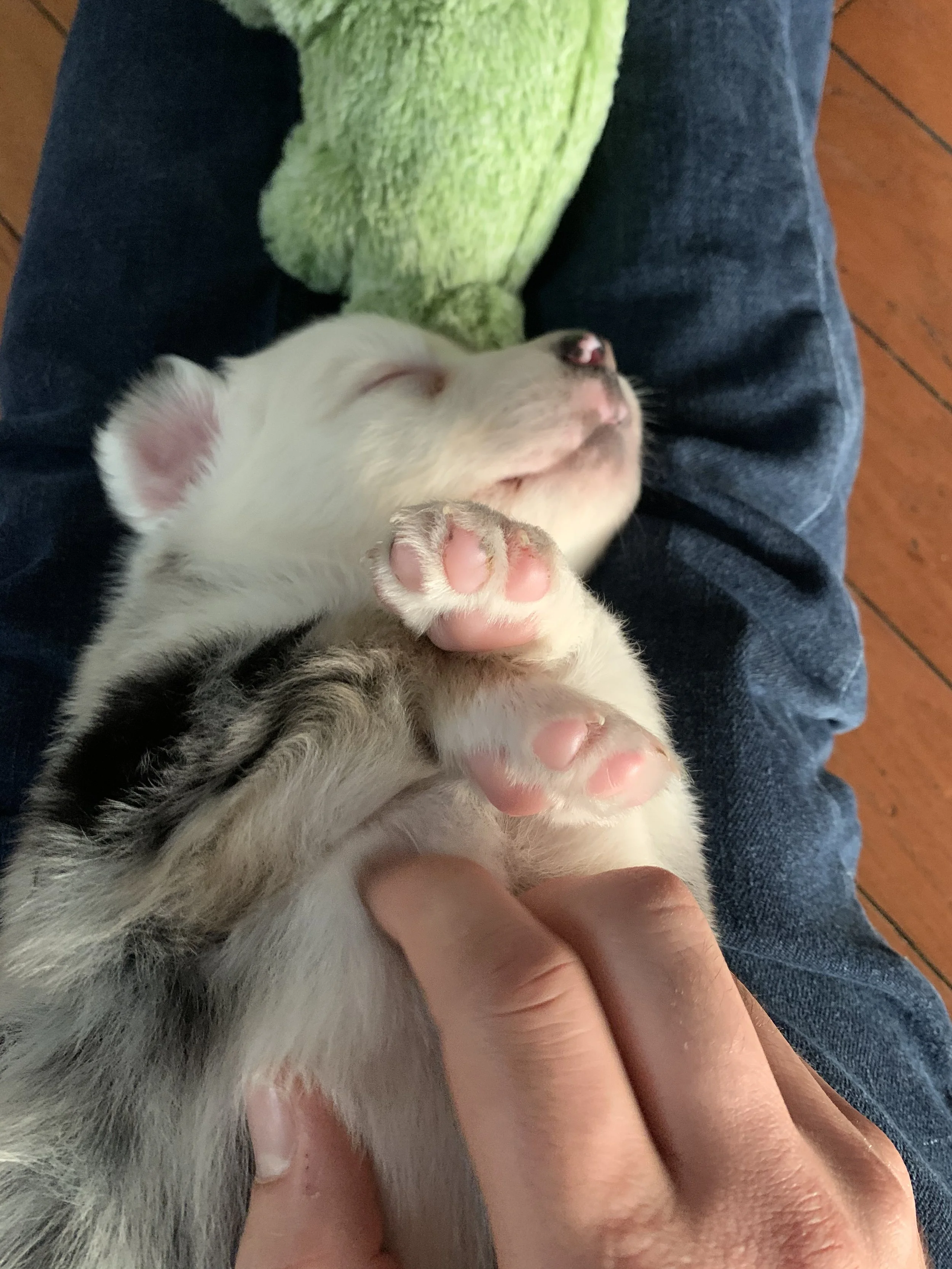
If you've ever lived with a teething puppy, you probably remember the feeling of wondering if your little land shark was ever going to stop putting everything in their mouth. Shoes, furniture, blankets, your hands… everything is a chew toy when you're a puppy.
Good thing it doesn't have to last forever! Puppies start losing their baby teeth at around 3–4 months old, with most of their adult teeth coming in by roughly 6–7 months. The goal isn't to stop your puppy from chewing during this time, it's to teach them what they can chew instead!
Keep appropriate chew toys available and redirect your puppy when they decide your shoe or table leg looks particularly delicious. Consistency is important, too. If one person allows a puppy to chew on their hands while another person doesn't, it's going to be pretty confusing for the puppy.
It's also worth being careful about what you give your puppy to chew. Harder doesn't necessarily mean better. Bones, antlers, very hard nylon toys, and other extremely hard objects can damage or fracture teeth. Even appropriate chew toys should be supervised, since any toy can become a hazard if your puppy manages to break off and swallow pieces.
The teething tip I absolutely swear by is frozen carrots! You can either take a clean carrot and pop it right in the freezer, or you can take it one step further and boil the carrots in unsalted bone broth, and then freeze them. These are multifunctional because they’re a chew toy, the cold feels good on their sore teething mouth, and it’s a healthy snack! My dog was obsessed with these as a puppy.
Teething can be a frustrating stage, but remember: your puppy isn't trying to destroy your house, they're just a baby with a mouth full of changing teeth. Give them appropriate outlets for that chewing instinct, redirect the things they shouldn't have, and you'll make it through!