
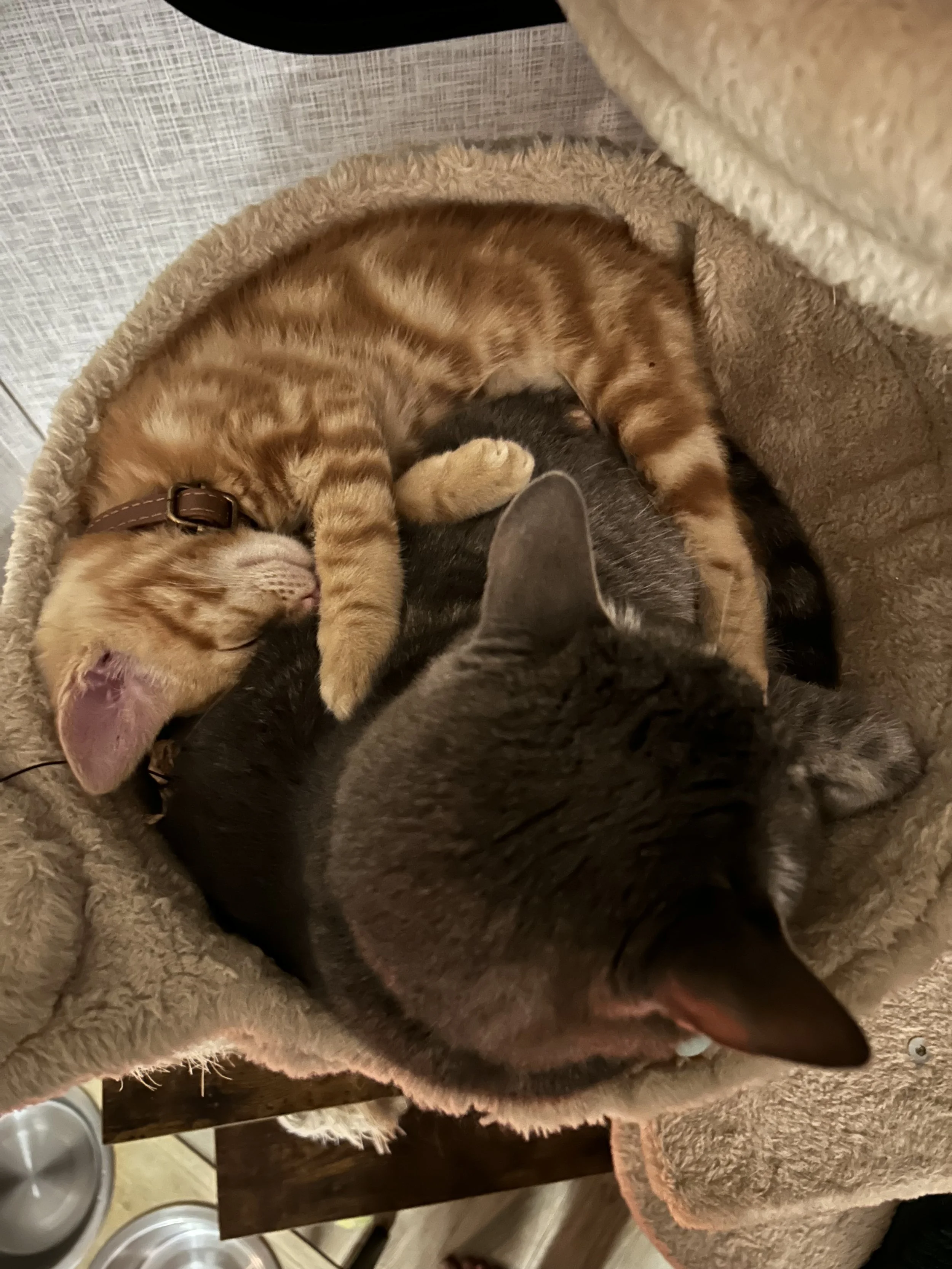
Thinking about adding another feline friend to your family? How exciting! But before you open the carrier and let everyone meet, please remember that cats usually need time to adjust to sharing their space.
I just went through this with my new kitten and older cat, and while it took time, they are now besties! Trust me, it’s worth taking it slow even if all you want to do is throw them together and see how it goes.
Even friendly, social cats can feel territorial or stressed when a new cat suddenly appears in their home. A slow introduction can make the transition much easier and help prevent unnecessary tension between your new addition and your resident cat.
Here are a few tips to help get things started on the right paw!
1. Start With a Separate Space
Before bringing your new cat home, set up a separate room just for them. This should be their safe space while they adjust to their new surroundings.
Include:
Food and fresh water
A litter box
A comfortable bed or hiding spot
Scratching surfaces
Toys and places to rest
Keep the door closed so the cats can get used to knowing another cat is around without having to interact face-to-face.
This also gives your new cat time to settle in without feeling overwhelmed by an entirely new home and another animal at the same time.
2. Let Them Get Familiar With Each Other's Scents
Cats rely heavily on scent to understand their environment. Try swapping blankets, bedding, or toys between the two spaces. You can also gently rub a soft cloth around one cat's cheeks and leave it in the other's area. Allow each cat to investigate at their own pace. If either cat seems uncomfortable, give them more time.
3. Introduce Them Through a Barrier
Once both cats seem comfortable with each other's scent, you can begin allowing them to see one another without direct contact.
A secure baby gate, screen door, or other appropriate barrier can help. You can offer treats or meals on opposite sides of the barrier, starting far enough away that both cats feel comfortable.
Keep these sessions short and positive. If you notice growling, hissing, intense staring, or attempts to attack the barrier, take a step back and give them more time.
A little curiosity is great! You don't need to rush things. My cat started off hissing and growing at our kitten as well. It doesn't mean they won’t warm up in time. It just means they’re not ready yet.
4. Try Short, Supervised Visits
When both cats are showing relaxed or curious behavior around the barrier, you can try brief, supervised interactions in the same room.
Keep the environment calm and give both cats plenty of space to move away. Use treats, toys, and positive experiences to help them associate each other's presence with something enjoyable. Don't force them to approach or interact. Let them decide how close they want to get.
If things become tense, calmly separate them and return to the previous step for a while.
5. Make Sure There Are Enough Resources to Go Around
One of the biggest ways to reduce tension in a multi-cat household is to make sure every cat has access to their own necessities.
A good general guideline is:
Litter boxes: One per cat, plus one extra.
Food and water: Multiple feeding and drinking locations.
Resting spots: Plenty of beds, hiding places, and cozy spaces.
Scratching surfaces: More than one scratching post or pad.
Vertical space: Cat trees, shelves, and elevated resting areas where possible.
Having multiple options helps prevent one cat from guarding or blocking access to important resources.
6. Be Patient and Watch Their Body Language
Some cats adjust within days, while others may need several weeks or even months. There's no universal timeline!
Hissing, growling, and some initial avoidance can happen during introductions. These behaviors don't automatically mean the cats will never get along, but they are signs to slow down and pay attention.
Watch for ongoing signs of stress, such as:
Hiding constantly
Refusing food
Avoiding the litter box or having accidents
Blocking access to food, water, or litter boxes
Chasing, stalking, or repeatedly cornering the other cat
If either cat stops eating, has persistent litter box changes, or seems particularly distressed, consult your veterinarian. A qualified feline behavior professional can also help if introductions aren't progressing.
Remember: Friendship Isn't the Only Goal!
It's wonderful when cats become cuddle buddies, groom each other, or play together. But not every cat will want that kind of relationship.
Sometimes success simply means two cats can comfortably share a home, pass each other in the hallway, and enjoy their own spaces without conflict.
The biggest takeaway? Don't rush the introduction. Giving cats time, space, and positive experiences can go a long way toward helping everyone feel at home.